
01 · Form
Wavy glass roof
The translucent cover carries sky and city by day, and becomes the lit surface itself after dark.

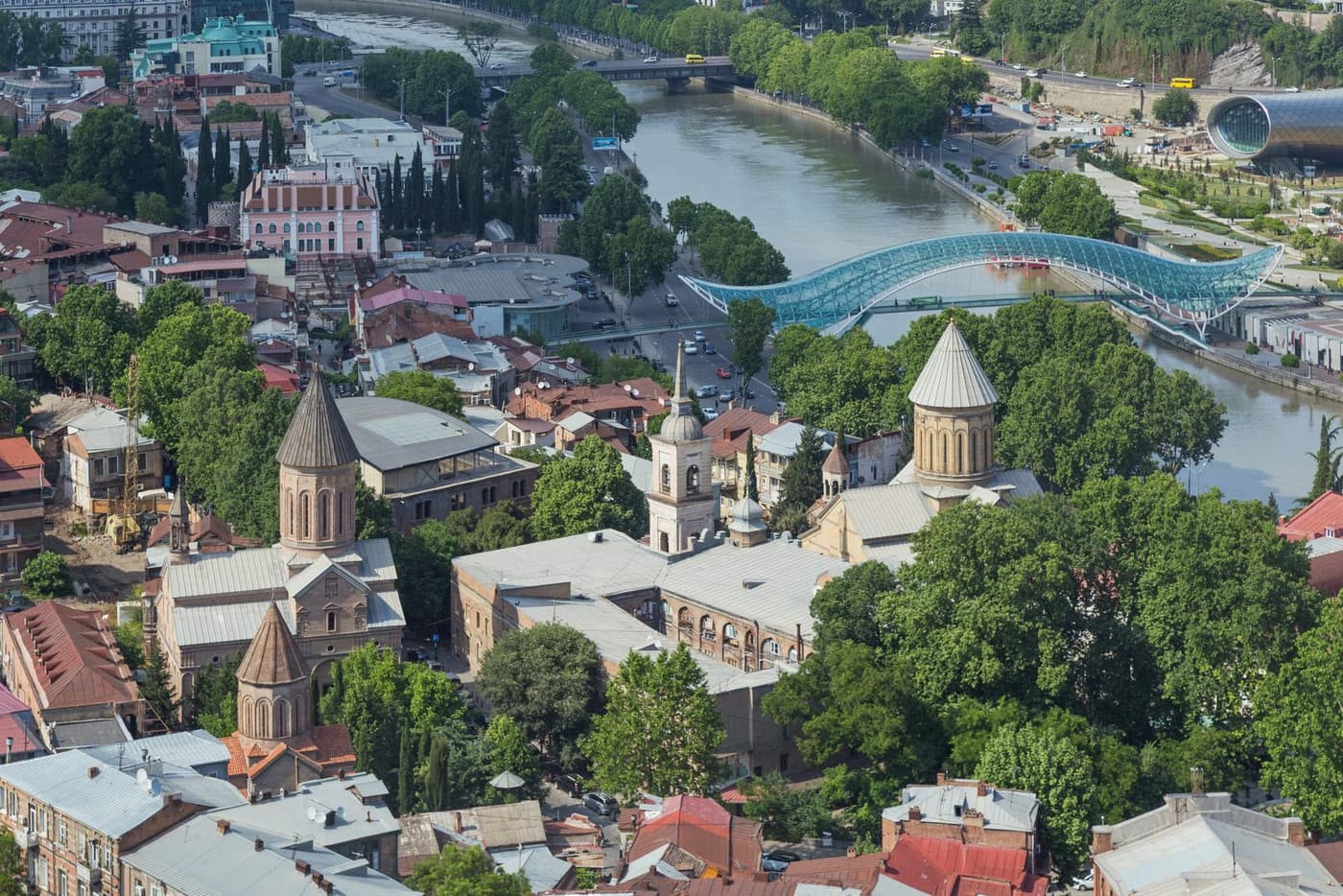
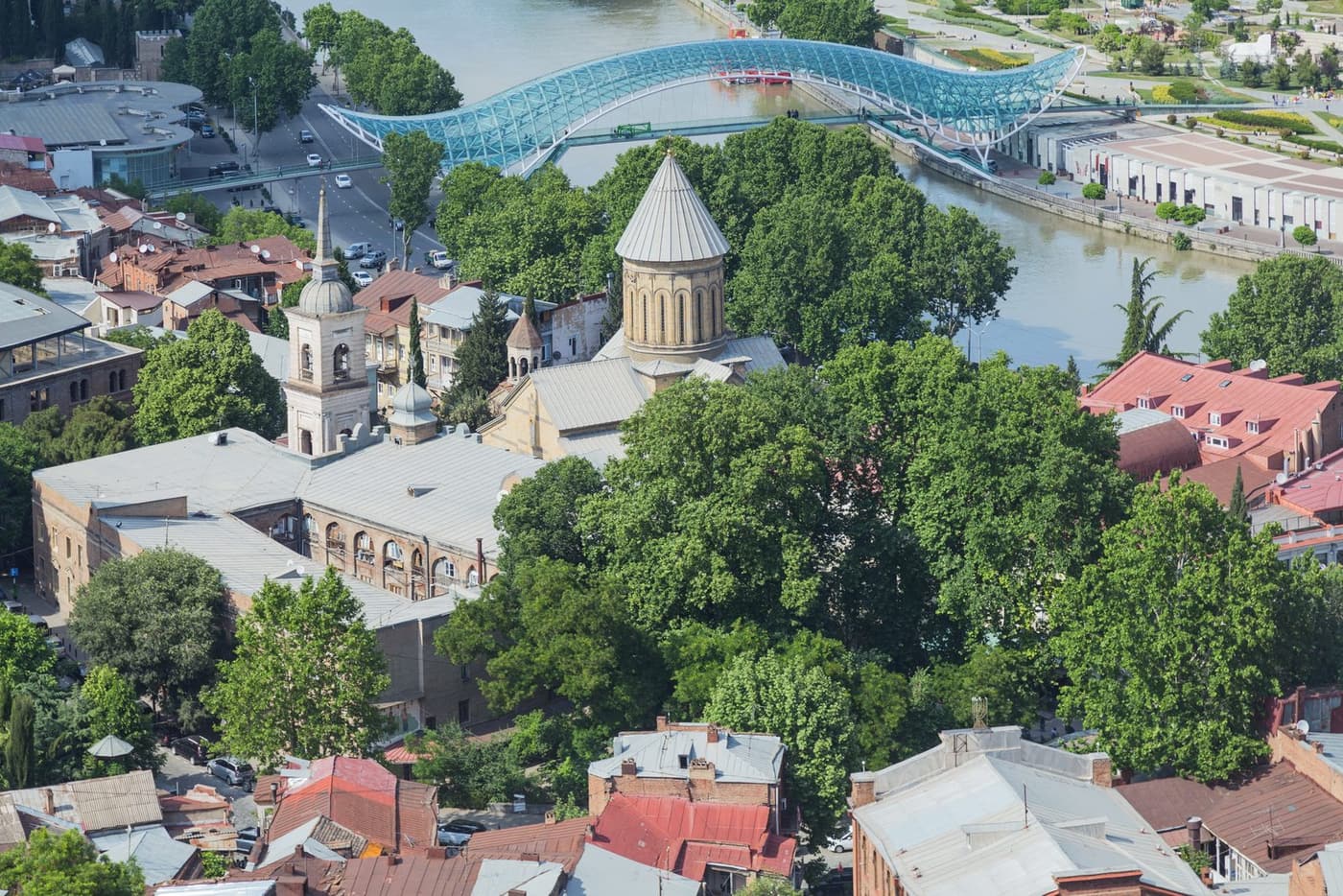
Opened in 2010, this pedestrian bridge links Erekle II Street and Rike Park — Old Tbilisi and the city’s modern rhythm.
The Bridge of Peace was designed by Italian architect Michele De Lucchi. Its wavy, pale-blue glass canopy rests on a steel skeleton and reads clearly as a contemporary landmark in the midst of the historic fabric.
At night the structure comes alive through a system by French lighting designer Philippe Martinaud — tens of thousands of LEDs turn the bridge into a soft, almost liquid volume.

Rhythmic white-steel lines form the lattice that makes the bridge easy to recognise even from afar.
The translucent cover carries sky and city by day, and becomes the lit surface itself after dark.
Rhythmic white-steel lines form the lattice that makes the bridge easy to recognise even from afar.
The LED system reads best from dusk, especially when the lighting reflects on the surface of the Kura.
The pedestrian bridge links Erekle II Street and Rike Park across the Mtkvari. Choose the bank that fits your wider Old Tbilisi route.
For the structure, glass and steel details.
Daylight shows the glass-and-steel structure. If you want an evening view, check conditions on the day; the historical lighting design is not a promise of a particular show or switch-on time.
An evening view depends on lighting and conditions at the time.
There is no fixed visit duration. Allow time for photographs, other pedestrians and the places you choose on either bank.
The official tourism source describes a pedestrian bridge, but does not publish a current ticket tariff. Do not confuse the bridge with paid cable-car, boat or guided-tour services nearby.
Google Maps displayed 24-hour access on all seven days when checked. This is a dated third-party listing, not a guarantee against temporary restrictions, maintenance or event closures.
Decide where to leave a vehicle before entering the Old Town streets. Check permitted parking and current pedestrian crossings for your actual starting point; no dedicated visitor parking is confirmed here.
Rike Park ↔ Erekle II Street
Coordinates: 41.6930019, 44.8082861
Avlabari can be considered when planning a route via Rike Park. Check the current transport map and the walking approach from your chosen exit; this guide does not promise a closest station or walking time.
Erekle II Street is the Old Town-side connection identified by Georgia Travel. Plan the approach from your starting point using current crossings and signs.
Set the destination to “Rike Park” or “Europe Square”. Route and stop numbers can change, so use current Tbilisi transport information before you travel.
Use the two banks to choose a direction: Rike Park on one side and the Erekle II Street approach to Old Tbilisi on the other. Nearby attractions have their own access conditions.
Rike Park is the bank-side connection named by the national tourism article. Treat other park facilities as separate services.
Metekhi is another Old Tbilisi landmark. Choose a route from the bank you are using rather than assuming a fixed walking time.
Abanotubani is known for its bath district. A bath visit is a separate activity with its own booking and access arrangements.
Narikala is a separate hillside destination. Confirm its current access and any transport before combining it with the bridge.
Choose a meal as a separate stop, based on current venue information. No business list is endorsed here.
Erekle II Street is the connection to the Old Town. If you plan a meal, choose a venue by its current menu and opening information.
The Meidan and Abanotubani area can be considered for a separate Old Town stop; no particular restaurant or current menu is verified here.
Towards Baratashvili, use the current street map to choose an onward walk. Check any café’s actual address before adding it to your route.

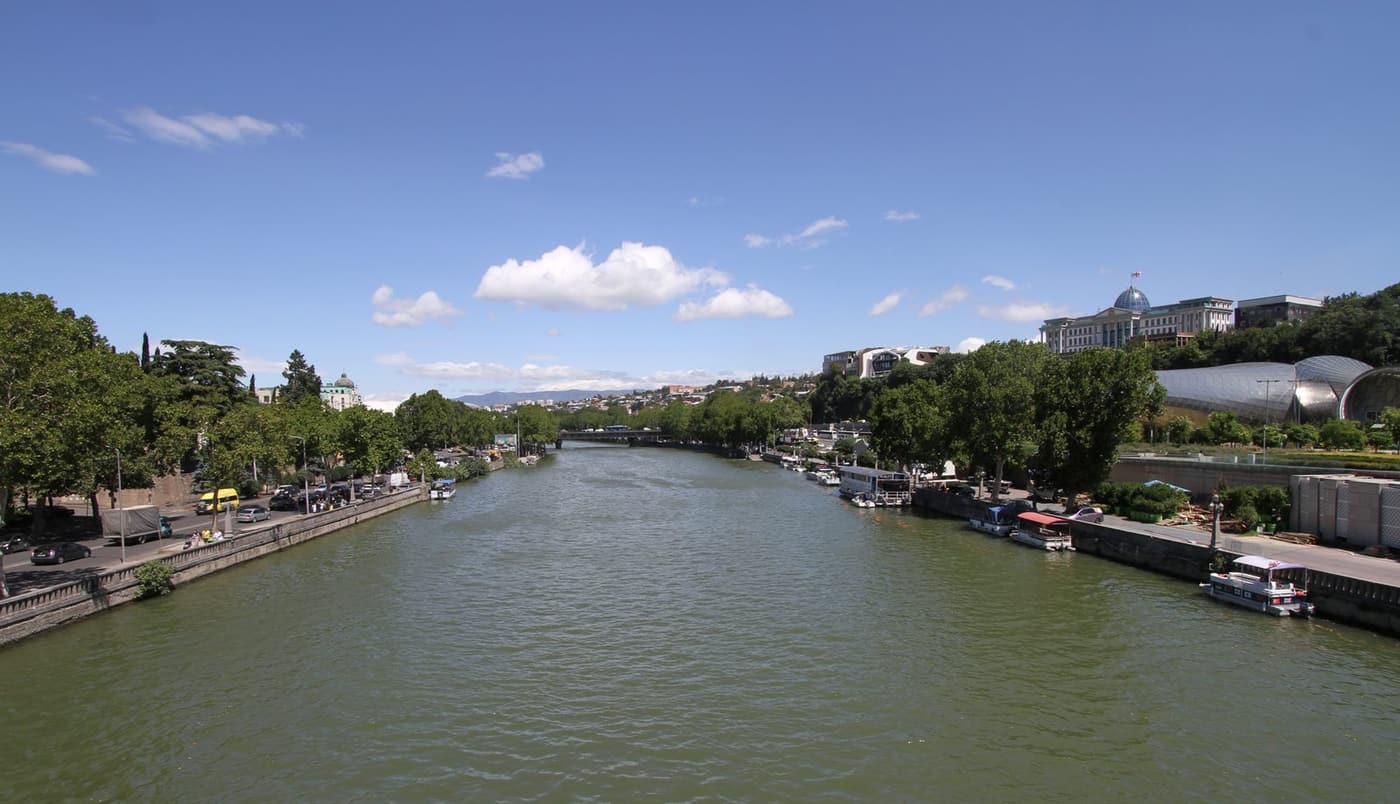
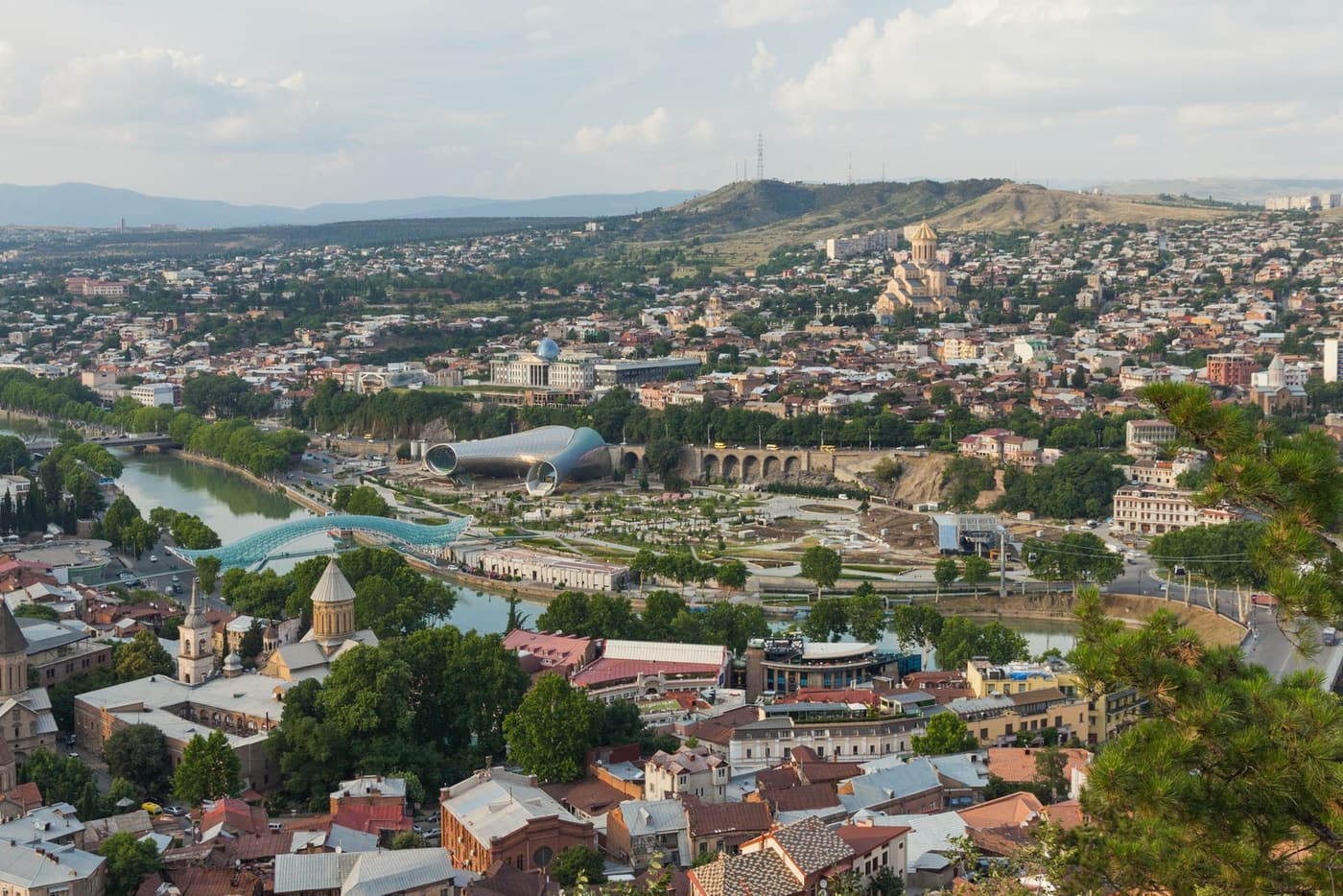
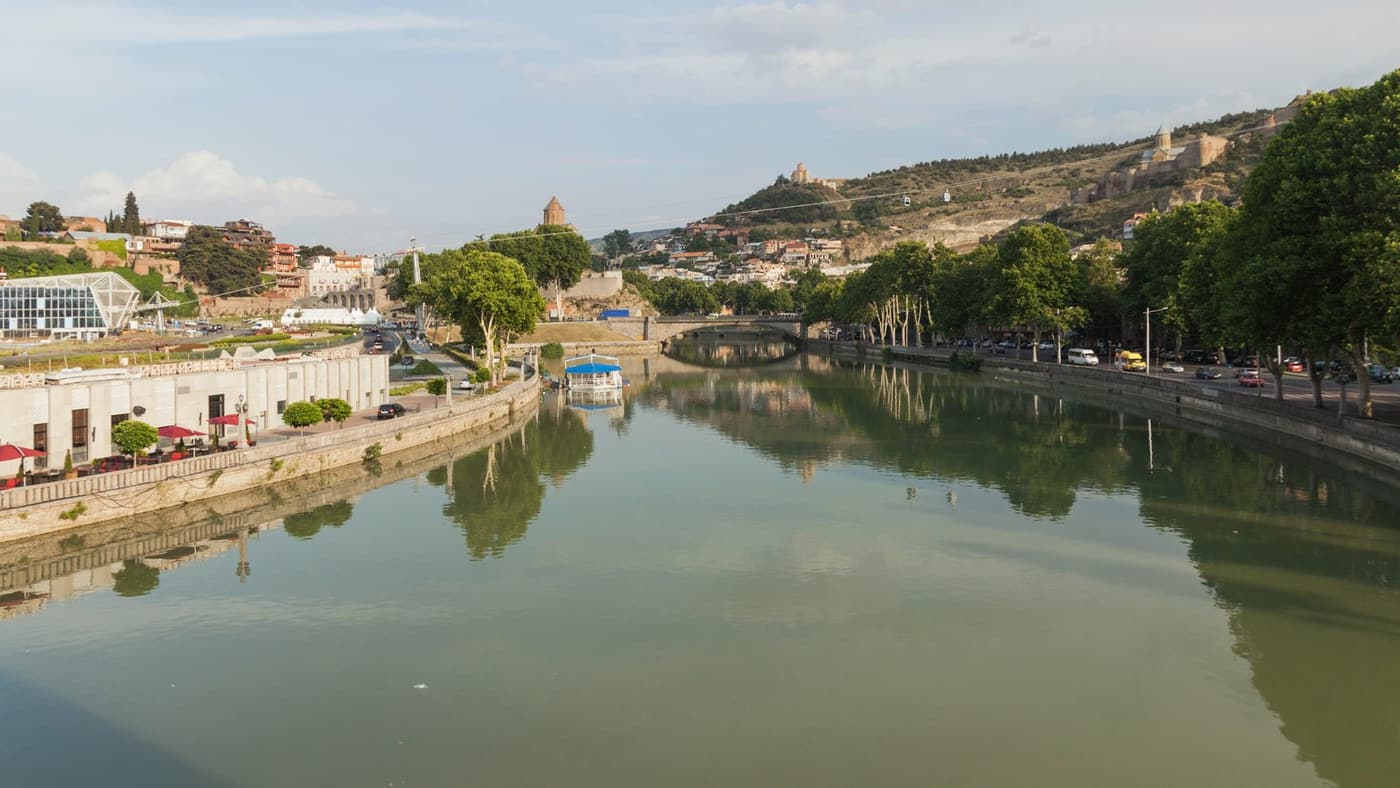
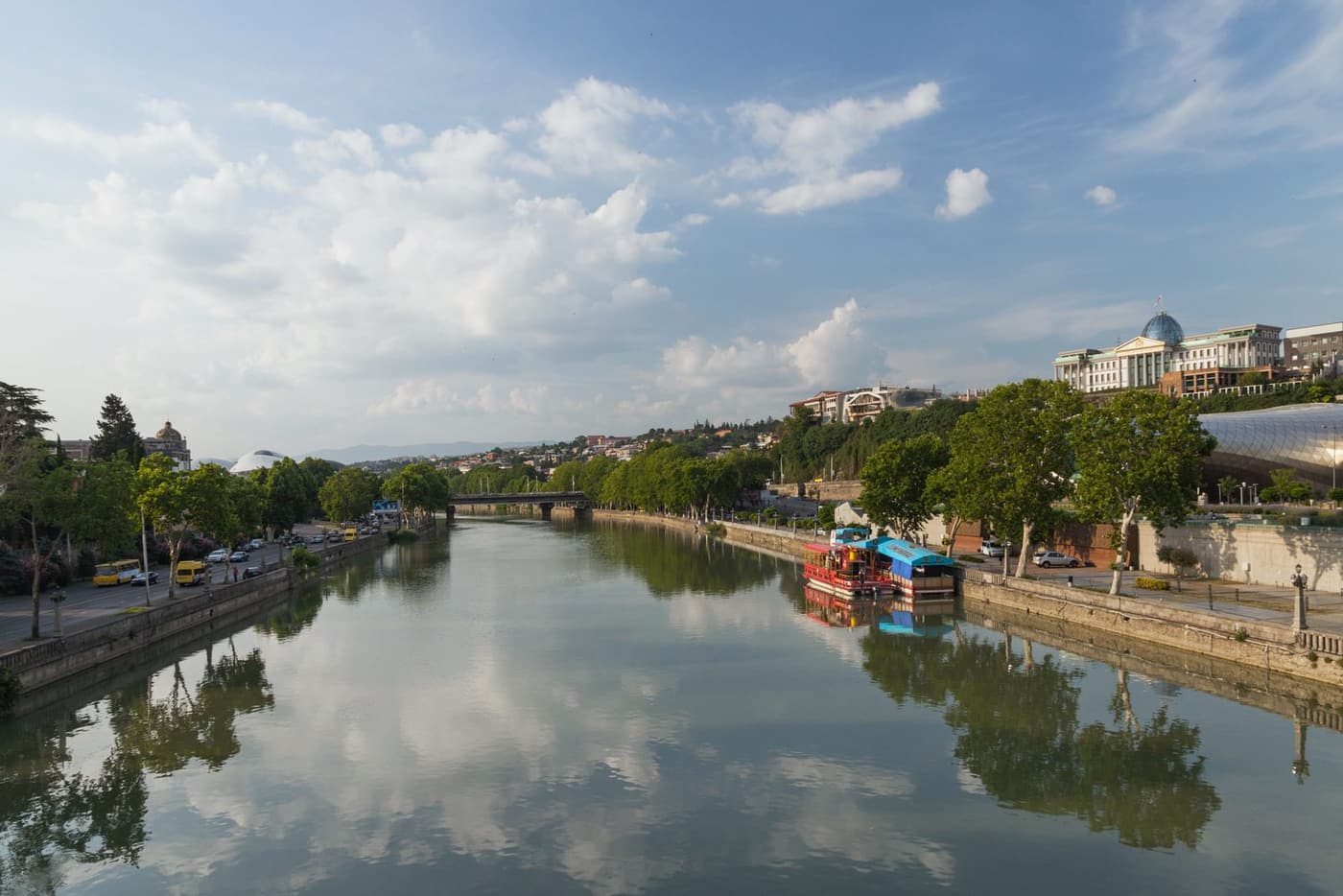
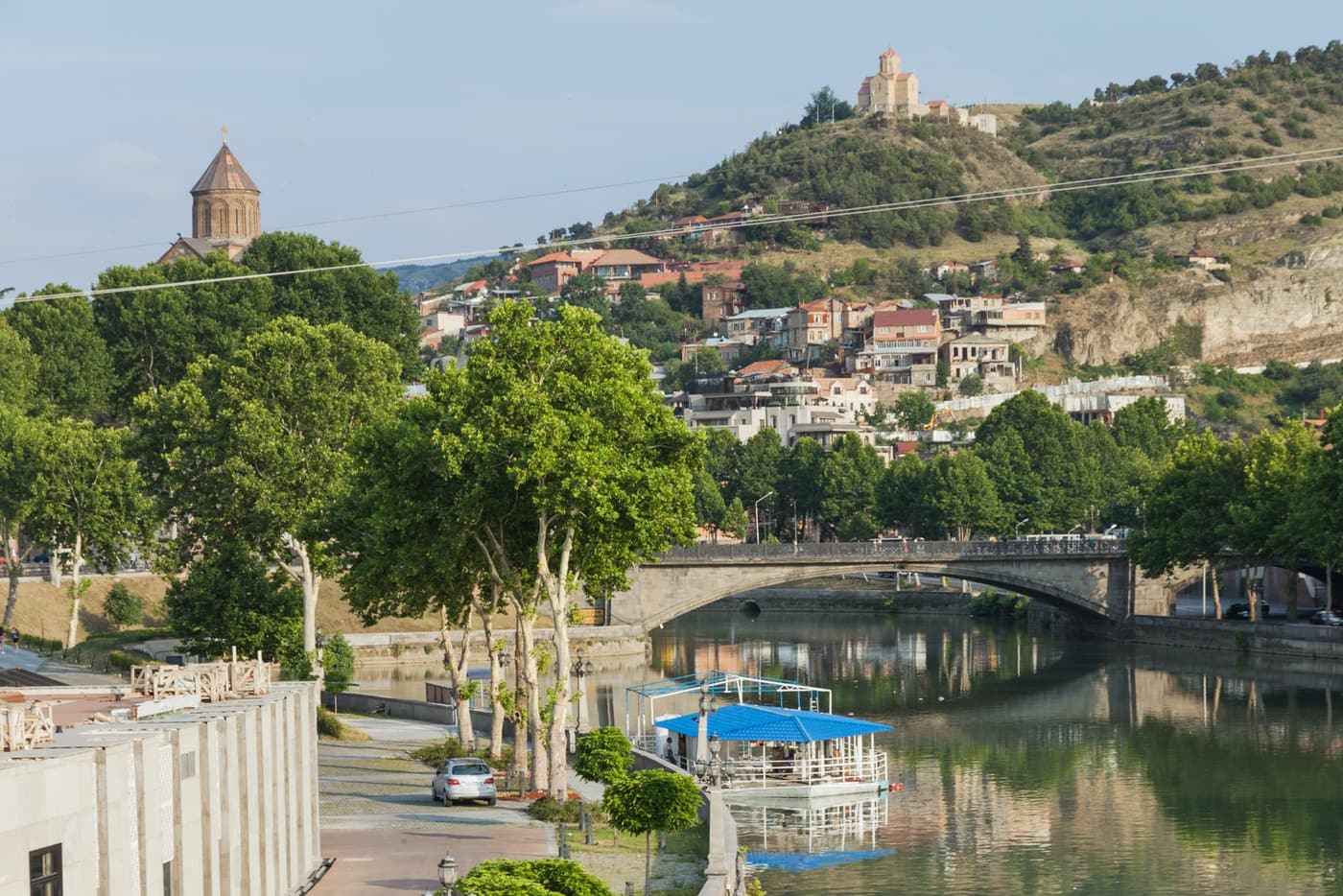
Try to include the Kura, the Old Town slopes and Rike’s green space. A wide frame shows better why this contemporary form stands out in Tbilisi’s historic fabric.
Seven historical city and river panoramas retain their full compositions, with the bridge appearing as part of the wider setting in some views. Authors, dates and licences accompany the images. The main section graphics are concept illustrations, not photographs.
Short answers before you plan your visit.
The official tourism article does not give a current admission tariff. Check any local access notice; cable cars, boats and private tours are separate services.
Daylight shows the glass-and-steel structure. If you want an evening view, check conditions on the day; the historical lighting design is not a promise of a particular show or switch-on time.
Choose the duration around photographs and the other stops you plan. There is no verified standard crossing or visit time for every traveller.
Check the current city transport map for your origin. Avlabari is a possible approach via Rike Park, not a verified universal closest or quickest option.
The bridge is pedestrian infrastructure, but this guide has not verified current step-free continuity, gradients or temporary barriers on every approach. Check the specific route for your mobility needs.
No guide can guarantee night-time safety or that lighting will operate during your visit. Consider current local notices, visibility, weather and your return journey.


